EPFO Sent You a Notice? Don’t Panic, Read This First
Opening the notice from EPFO can make your heart race. You see words like “demand”, “non-compliance”, “penalty”, or “enquiry”, and your mind starts to worry. We understand that feeling completely.
But here is the truth: most EPFO notices are routine. They are not criminal cases. They are not going to take away your salary. In most situations, a simple reply or a quick correction is usually all that is needed.
We created this article to help you understand every type of EPFO notice, what each one means in plain language, and what exact steps you must take. By the time you finish reading this, you will know exactly what to do.
What is EPFO, and Why Does It Send Notices?
EPFO stands for Employees’ Provident Fund Organisation. It is a government body under the Ministry of Labour and Employment, Government of India. EPFO manages the retirement savings of over 6 crore active members across India.
EPFO works under three main laws:
EPFO sends notices to both employers and employees when it finds something that requires attention. This could be a missing document, an unpaid contribution, a discrepancy in records, or a legal compliance issue.
Getting a notice does not automatically mean you are in trouble. It means EPFO wants information or action from you.
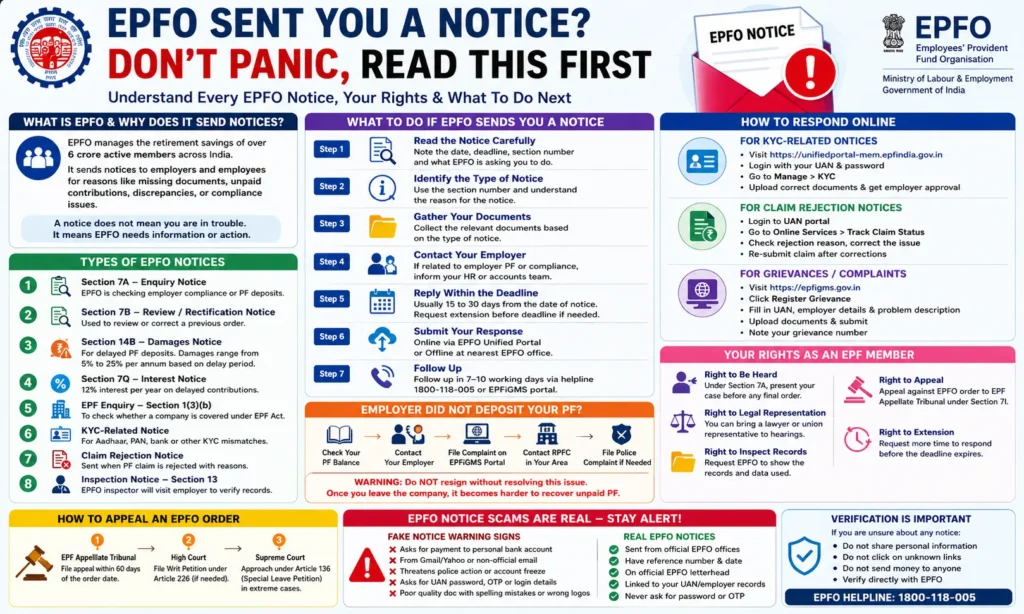
Types of EPFO Notices
There is no single type of EPFO notice. Each notice has a different reason and a different response. Let us break them all down for you.
1. Section 7A Notice, Enquiry Notice
This is one of the most common notices. It comes under Section 7A of the EPF Act, 1952. EPFO sends this to an employer when it wants to determine whether a company is covered under EPF rules or whether the right amount of PF has been deposited.
What it means for you as an employee: Your employer may be under investigation. EPFO is checking whether they have been depositing your PF correctly and on time.
What you should do: If you receive this notice as an employee, it means EPFO may ask you for your employment records. Keep your salary slips, appointment letter, and UAN passbook ready.
2. Section 7B Notice, Review or Rectification Notice
This notice asks EPFO to review a previous order. If EPFO made a mistake in an earlier demand or if new facts have come to light, a Section 7B notice allows for correction.
What you should do: If you believe EPFO made an error in a previous order against you or your employer, this is the path to correct it. File a written response with supporting documents.
3. Section 14B Notice, Damages Notice
This notice comes when an employer has not deposited PF contributions on time. EPFO charges damages under Section 14B of the EPF Act. The rate of damages depends on how many months the payment was delayed.
| Delay Period | Rate of Damages |
| Less than 2 months | 5% per annum |
| 2 months to 4 months | 10% per annum |
| 4 months to 6 months | 15% per annum |
| More than 6 months | 25% per annum |
What you should do as an employee: This notice goes to your employer, not you. But it affects your PF money. If you receive this notice, contact your HR department immediately and ask about the status of your PF deposits.
4. Section 7Q Notice, Interest on Delayed Payment
Under Section 7Q of the EPF Act, EPFO charges 12% interest per year on any PF contribution that was not paid on time. This notice is usually sent to the employer.
If you are an employee and you receive this, it likely means EPFO is sending you a copy as the affected party. You do not need to pay anything. But you should follow up with your employer.
5. EPF Enquiry Notice Under Section 1(3)(b)
This notice asks whether your company should be covered under the EPF Act. EPFO sends this when a company’s employee count or nature of work is not clear. The employer must respond with detailed records.
6. KYC-Related Notice
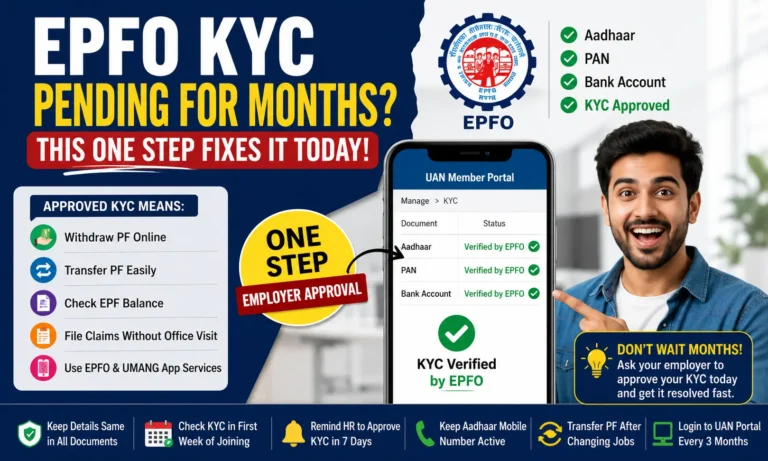
This is the most common notice that individual employees receive. EPFO sends this when your KYC documents are missing, wrong, or do not match your records.
Common KYC notice reasons:
7. Claim Rejection Notice
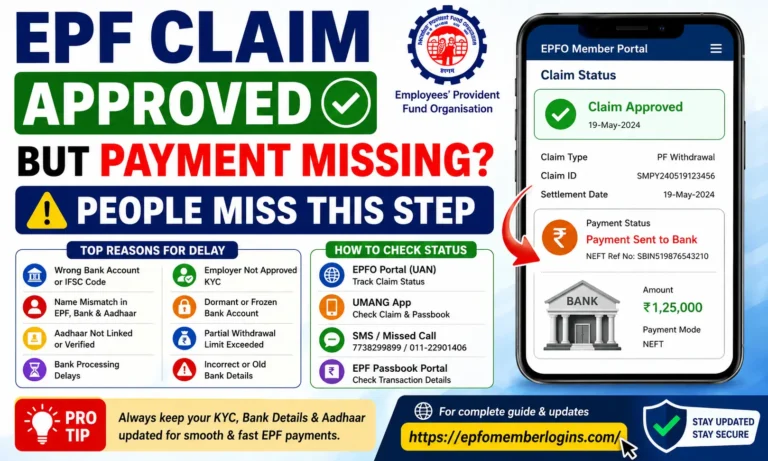
If you filed a PF withdrawal or transfer claim and EPFO rejected it, you will receive a notice explaining the reason. Common reasons include wrong bank details, incomplete KYC, or the wrong claim form used.
8. Inspection Notice Under Section 13
This notice informs an employer that an EPFO Inspector will visit their office to check payroll records, salary registers, and PF contribution data. Employers must cooperate fully and keep all records ready.
How to Identify Your EPFO Notice Type
When you receive an EPFO notice, look at these three things first:
Action Required: Read the last paragraph carefully. EPFO usually lists what they want you to do: submit documents, appear in person, or pay a demand.
Section Number: Look for phrases like “Section 7A”, “Section 14B”, or “Section 7Q” in the notice. This tells us exactly what type of notice it is.
Sent To: Check whether the notice is addressed to you personally or to your employer. Your name and UAN will appear if it is for you.
What to Do If EPFO Sends You a Notice
Receiving an EPFO notice can feel scary at first, especially if you do not understand why it was sent. Many employees panic immediately and think there is a major problem with their PF account. But in most cases, EPFO notices are simply requests for clarification, document verification, or correction of small errors.
The important thing is to stay calm and respond properly within the given time. By following the correct steps, you can solve most EPFO notice issues without stress or delay.
Step 1: Read the Notice Carefully, Do Not Panic
We know it is hard, but take a deep breath and read the notice fully from start to finish. Note the date it was issued, the deadline for response, the section number cited, and what EPFO is asking you to do.
Step 2: Identify the Type of Notice
Use the section number to find out what type of notice you have received. Refer to the Types of Notices section above in this article.
For example:
Knowing the notice type makes it easier to prepare the correct response.
Step 3: Gather Your Documents
Depending on the type of notice, collect the relevant documents. Here is a quick list:
| Notice Type | Documents to Collect |
| KYC Notice | Aadhaar card, PAN card, bank passbook, UAN card |
| Section 7A Enquiry | Salary slips, appointment letter, UAN passbook printout |
| Claim Rejection | Claim form copy, bank details, KYC documents |
| Section 14B Damages | PF challan receipts, salary register (employer) |
| Section 7Q Interest | Payment receipts, wage register (employer) |
| Inspection Notice | All payroll records, attendance register (employer) |
Step 4: Contact Your Employer
If the notice is related to your employer’s PF deposits or compliance, contact your HR department or accounts team immediately. Share the notice with them and ask for a joint response. Do not try to handle employer-side issues alone.
Step 5: Reply Within the Deadline
Every EPFO notice has a response deadline. This is usually 15 to 30 days from the date of the notice. You must reply within this time. If you need more time, you can write to EPFO and request an extension before the deadline passes.
Step 6: Submit Your Response
You can submit your response in two ways:
Online:
Log in to the EPFO Unified Portal and upload your documents or response through the correct section.
Offline:
Visit your nearest EPFO office with:
Always ask for an acknowledgement receipt after submission.
Step 7: Follow Up
After submitting your response, follow up within 7 to 10 working days. You can call the EPFO helpline at 1800-118-005 or check the status on the EPFiGMS grievance portal at https://epfigms.gov.in.
Your Employer Did Not Deposit Your PF
This is one of the most serious PF problems an employee can face. Every month, PF money is deducted from your salary with the promise that it will be deposited into your EPFO account. But sometimes employers deduct the amount and never submit it to EPFO.
This is not unfair; it is a legal violation under the EPF Act, 1952. Employers who fail to deposit employee PF contributions can face penalties, legal action, and even criminal prosecution.
If you discover that your PF amount was deducted but not deposited, take action immediately.
1. Check Your PF Balance
First, log in to your UAN Member Portal and check your EPF passbook carefully. If contributions are missing for months during which you worked, it may mean your employer did not deposit your PF.
You can check your passbook here:
EPFO Passbook Portal
2. Contact Your Employer
Speak with your HR department or employer and show them the missing entries in your passbook. Ask for a written explanation and keep copies of salary slips, offer letters, and bank statements as proof.
3. File a Complaint with EPFO
If the employer does not cooperate, file an official complaint through the EPFO grievance portal. Select the complaint category related to PF non-deposit and provide your UAN number and employer details.
Official grievance portal:
EPFiGMS Portal
4. Contact the Regional PF Commissioner
You can also visit or write to the Regional Provident Fund Commissioner (RPFC) in your area. Carry all supporting documents, including:
5. File a Police Complaint if Needed
If your employer deducted PF money from your salary but intentionally failed to deposit it, this may be treated as a criminal offence under Indian law.
In serious cases, employees may file an FIR for criminal breach of trust.
How to Submit Your EPFO Notice Response Online
EPFO has made many services digital, which means you can now respond to several notice types online without visiting the office physically. This makes the process faster, easier, and more convenient for employees.
Below are the simple steps to handle different EPFO notices online.
For KYC-Related Notices
If your notice is related to Aadhaar, PAN, bank account, or other KYC issues, follow these steps:
For Claim Rejection Notices
If your PF withdrawal claim was rejected, do this:
For Grievances or Complaints
If you want to file a complaint against your employer or report an EPFO issue, use the EPFiGMS portal.
Your Rights as a Member When You Receive a Notice
Many employees become nervous after receiving an EPFO notice because they think they have no control over the situation. But under the EPF Act, employees and employers both have important legal rights. EPFO cannot take action against you without giving you a fair opportunity to respond.
Here are some important rights you should know:
Under Section 7A of the EPF Act, you have the right to explain your side before EPFO passes any final order against you.
If you disagree with an EPFO decision, you can file an appeal before the EPF Appellate Tribunal under Section 7I of the EPF Act.
You can bring a lawyer, legal advisor, or union representative to assist you during EPFO hearings or enquiries.
You can ask EPFO to show the records, calculations, or documents on which the notice is based.
If you need extra time to collect documents or prepare your response, you can submit a formal request to EPFO asking for an extension before the deadline expires.
How to Appeal an EPFO Order
If EPFO passes an order against you and you believe the decision is unfair or incorrect, you still have legal options. Many employees do not know that EPFO orders can be challenged through proper legal channels.
The important thing is to act within the allowed time limit and keep all your documents ready.
Step 1: File an Appeal Before the EPF Appellate Tribunal
Under Section 7I of the EPF and Miscellaneous Provisions Act, 1952, you can file an appeal before the Employees’ Provident Fund Appellate Tribunal (EPFAT). You usually need to file the appeal within 60 days from the date of the EPFO order.
Before filing, keep these documents ready:
Step 2: Approach the High Court
If you are not satisfied with the Appellate Tribunal’s decision, you may file a Writ Petition before the concerned High Court under Article 226 of the Indian Constitution.
The High Court can review whether the EPFO order violated legal procedures or your rights.
Step 3: Approach the Supreme Court
In rare or serious situations, you may approach the Supreme Court of India through a Special Leave Petition (SLP) under Article 136 of the Constitution.
This step is usually taken only when:
Important Point:
Legal appeals can take time, so always:
Taking quick action improves your chances of resolving the issue successfully.
EPFO Notice Scams Are Real
Fake EPFO notices are becoming more common, and many employees get trapped because they look very convincing. Fraudsters try to scare people into paying money or sharing sensitive details like UAN login, password, or OTP.
The good news is: you can easily protect yourself if you know what to look for.
How to Identify a Fake EPFO Notice
Be alert if you notice any of these warning signs:
What Real EPFO Notices Look Like
Authentic EPFO notices are always:
What You Should Do If You Suspect a Scam
If you are unsure whether a notice is real or fake:
Conclusion
An EPFO notice is not something you should ignore, but it is also not something you should fear blindly. In most cases, these notices are sent to correct records, verify details, or resolve mismatches in your PF account. The real problem starts when employees misunderstand the notice or delay their response.
The key to handling any EPFO notice is simple: stay calm, understand the reason clearly, and respond within the given time. Whether it is a KYC issue, claim rejection, employer-related problem, or compliance notice, most issues can be solved step by step if you follow the correct process and keep your documents ready.
It is also very important to use only official EPFO portals and never trust random messages, calls, or emails asking for money or login details. Fraud cases are increasing, and many people lose money simply because they do not verify information properly.
EPFO is a system designed to protect your retirement savings, not to harm you. If you act quickly, communicate with your employer when needed, and use official channels for response or complaint, you can resolve most issues without stress.